Backend, API & Integrations

Backend, API & Integrations

The part you never see, and the part that wakes you at 3am.

The API, database and infrastructure your app runs on: built to stay fast as you grow, built to connect to the systems you already run, and built with the bill capped before launch day.

Your cloud accounts, in your name, from week one. Your code, your data, your keys.

What usually goes wrong

What clients say, and what it actually means

“Does it allow you to set a billing limit, or is it one of those exciting cloud services where no matter what you do you are always one mistake away from losing your house?”

What it means

Nobody capped the bill. The bill that arrives when you are not looking

“I am outsourcing my first app and want to know who hosts all the database and images. I am guessing it is me?”

What it means

Nobody told them who owns the infrastructure. Your accounts, your keys, your data

“Vendor lock-in. When Google or Firebase says jump you have to say how high.”

What it means

The convenient choice became the permanent one. Firebase, Supabase, or your own

“Migrating data and moving to your own solution might be a problem later.”

What it means

The day-one decision was never revisited. Firebase, Supabase, or your own

Who you’ll actually work with

Anand Yadav, Founder of SightInfusion Infotech

Anand Yadav

Founder, SightInfusion InfotechUpwork Top Rated100% Job Success54 client reviews52+ apps and products delivered

The backend is where I get called in after somebody else built it. Almost always for one of two reasons: the bill went somewhere nobody expected, or the thing that worked with a thousand users stopped working with fifty thousand.

Both are decisions, not accidents. Both are made in the first two weeks, usually by somebody moving fast, and both are cheap to get right at the start and expensive to fix later.

So on this service I will tell you the boring version. Where your data lives, whose name is on the account, what it costs at ten times your current size, and what it would take to move away from us. If a developer will not answer those four questions, that is your answer.

Cost control

The bill that arrives when you are not looking

Cost control is part of the build, not an afterthought. Spending caps on cloud platforms are usually alerts, not brakes. They tell you afterwards.

$72,000

Runaway Cloud Recursion

Infinite recursion on Cloud Run & Firestore spiked a $5,000 bill to $72,000 in 2 hours before anyone noticed.

Source: The Register
$18,000+

Public API Key Exploited

A leaked API key was hit with 60,000+ unauthorized requests, punching straight through a spending cap.

Source: Tom's Hardware
Up to $100K

Unbounded Queue Blowout

Unbounded queues, infinite loops, and bandwidth spikes resulting in sudden multi-thousand-dollar invoices.

Source: ServerlessHorrors
How we cap your bill before launch day: 6 built-in safeguards we install on every backend:

Hard Concurrency Limits

Strict instance and concurrency caps on every auto-scaling service: the actual physical brake, not an email alert.

Per-Key Rate Limiting

Throttling per key and per user so one leaked or abused key cannot turn into a massive cloud bill.

Pipeline Secret Scanning

Key rotation and automated repository scanning so secrets never reach public code repositories.

Tiered Budget Alerts

Multi-threshold alerts at 50%, 80%, and 100% of budget routed directly to both your team and ours.

10x Costed Load Test

Pre-launch load testing so you know exact monthly running costs before reaching 10x traffic.

Runbook & Emergency Brakes

Clear documentation of all cost switches in your runbook so operational control stays with you.

✓Takes ~half a day to set up: the cheapest insurance in your project.

When you should not hire us

Firebase, Supabase, or your own backend? An honest answer.

On most early MVPs, a managed platform like Firebase or Supabase is the right trade. Build custom only when your architecture or scale demands it.

MANAGED PLATFORM

Use Firebase or Supabase when

Speed for First Version

Real-time sync, auth, and storage arrive on day one instead of week three.

Predictable Data Model

Your data shape is simple and query requirements are straightforward.

Pay-As-You-Go Model

You prefer small per-use operational costs over custom build investments.

Validate Ceiling Later

You prefer discovering platform limits with real users rather than guessing upfront.

CUSTOM BACKEND

Build your own backend when

Complex Querying & Filtering

Filtering on multi-nested conditions becomes slow and awkward on NoSQL.

Unfavorable Cost Scaling

Monthly usage invoices start outgrowing your revenue as active users scale.

Avoiding Vendor Lock-in

You cannot afford platform decisions and API breaking changes dictating your roadmap.

Data Residency & Compliance

Regulated data, strictly on-premise infrastructure, or custom enterprise compliance.

DAY 1 ARCHITECTURE

How we design for zero vendor lock-in from Day 1

All data access runs through a single decoupled abstraction layer rather than scattered direct platform calls. It costs a few extra days upfront, but turns a nightmare 6-month migration into a smooth 2-week swap if you ever outgrow your stack.

Integrations

Connecting to everything else you already run

An app that does not talk to your other systems creates work instead of saving it. Somebody always ends up copying data between screens.

PAYMENTS

Payments & Billing

Stripe, Razorpay, PayPal, and native in-app purchases.

BUSINESS

ERP & Legacy Systems

CRM, ERP, accounting, inventory, HR, and enterprise tools.

IDENTITY

Auth & Identity

Social sign-in, OAuth2, SAML/SSO, biometrics, and KYC verification.

MESSAGING

Messaging & Comms

Push notifications, transactional email, SMS, and WhatsApp.

LOGISTICS

Logistics & IoT

Shipping carriers, live tracking, maps, device, and IoT feeds.

AI SERVICES

AI & Vector Search

LLM Model APIs, vector database search, and usage caps.

Reliability & Standards

What we deliver with every integration

Every external system fails eventually. Here is what we deliver with every integration to ensure third-party downtime never breaks your app.

Downtime & Failure Resilience

What happens when it goes down

Every external provider fails eventually. Our integration map defines explicit behavior: queue, retry, degrade, or inform users gracefully.

API Version Pinning & Alerts

What happens when it changes

Provider APIs are version-pinned and monitored so vendor changes turn into scheduled backlog tickets rather than unexpected production outages.

Per-Call Usage & Cost Auditing

What it costs per request

Usage caps and telemetry on third-party APIs charging per request to prevent unexpected API provider billing surprises.

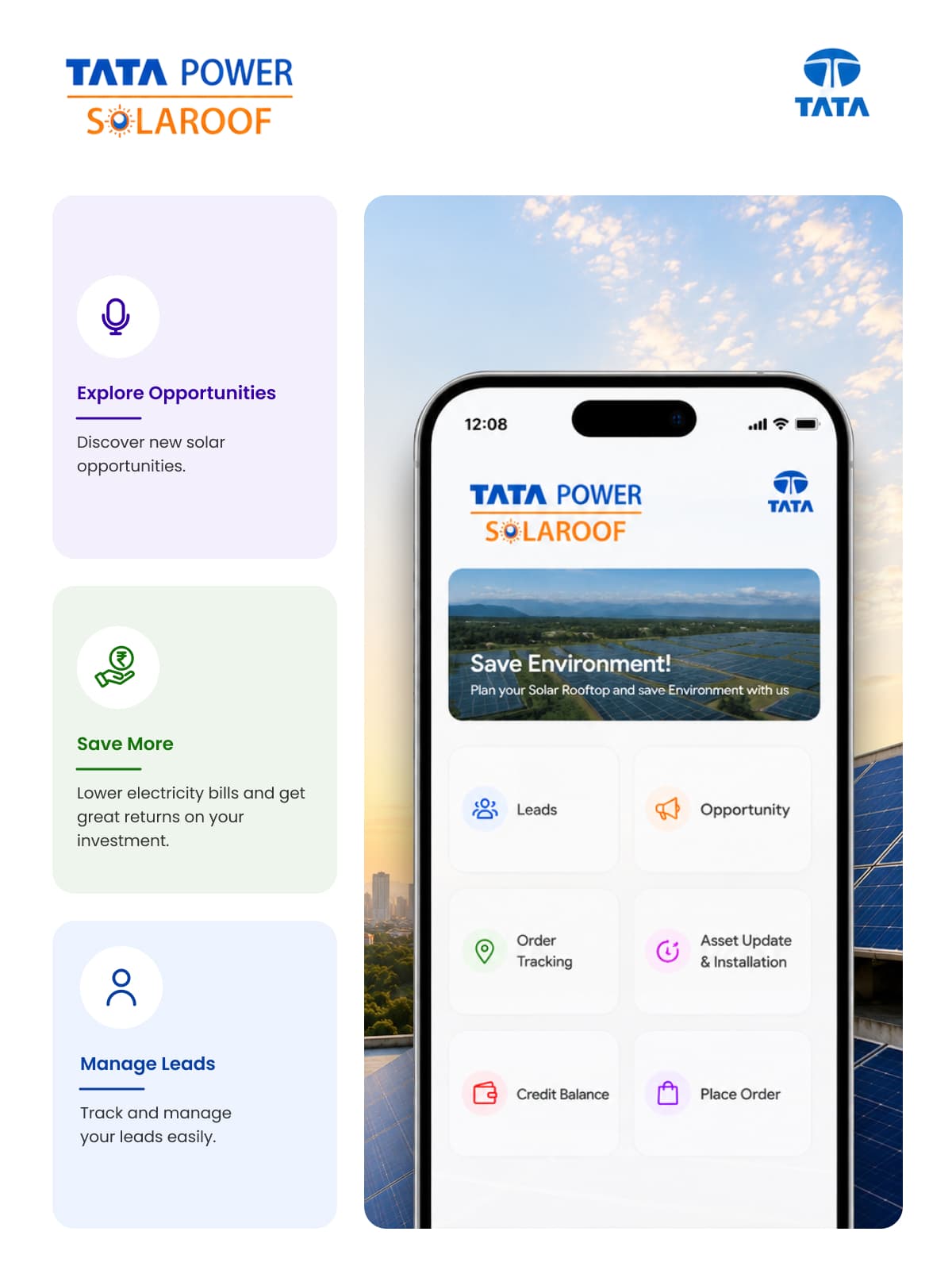
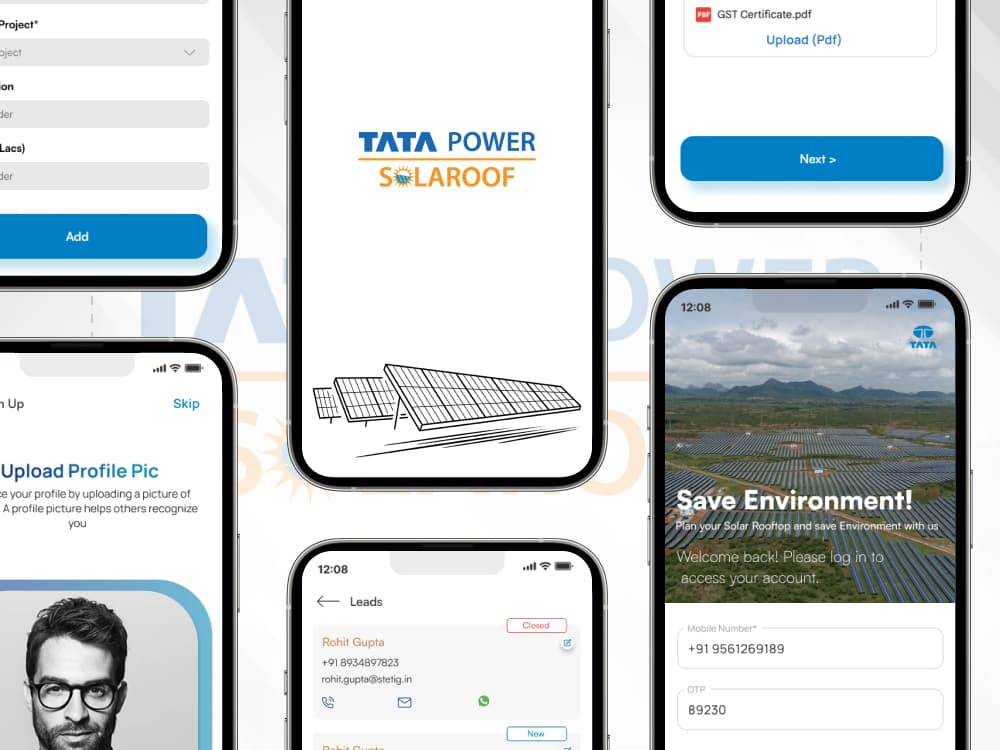
Enterprise B2B Channel Sales App for Tata Power Solar
Enterprise Solar CRM·Enterprise & CRM·tatapower.com/solaroof↗

Enterprise B2B Channel Sales App for Tata Power Solar

A Flutter app that gives Tata Power's rooftop solar channel partners and retailers one place to onboard, manage leads and opportunities, place orders, register installed assets and request inspections, wired directly into Tata Power's Salesforce CRM.

Outcome & Context
Tata Power SolaRoof, an enterprise field application integrated with the systems the client already ran. Lead-to-order 45% faster, asset tracking 99% accurate, KYC from days to minutes.
FlutterGetXSalesforce

Standards

How we work to spec

Every merge reviewed by a person. AI writes code here, it does not approve it.

The API is documented as it is built, not written up at the end.

Backups are configured and restored once, as a test, before handover. An untested backup is a rumour.

Load tested at 10x current volume, with the results written down.

Secrets in a manager, never in the repository, with scanning in the pipeline.

Staging environment that matches production, that you can access.

Your accounts, your keys, your data, from week one.

Standards

Standards for the API itself

Core engineering principles baked into every API endpoint we design, document, and deploy.

API.01

REST or GraphQL Architecture

Chosen specifically for your application requirements and explained in plain language.

API.02

Versioned from Day 1 (v1)

Versioned endpoints so tomorrow's API updates never break yesterday's app build.

API.03

Consistent Error Responses

Standardized error schemas so frontend clients handle failures predictably without guessing.

API.04

Built-in Pagination & Rate Limits

Designed into every endpoint from day one, not retrofitted after the first slow screen.

API.05

Upfront Auth & Role Controls

Authentication & Role-Based Access Control (RBAC) designed before writing the first endpoint.

API.06

Automated CI/CD Test Suite

Comprehensive automated test suites executing on every repository push to prevent regressions.

Where we have shipped

Industries we serve

Each item below lists industry and what we have built.
Fintech and banking
Fintech and bankingWallets, lending, KYC, crypto, real-time settlement
Legal-tech
Legal-techCase data, document systems, auctions
Energy and utilities
Energy and utilitiesEnterprise integration, field data, asset tracking
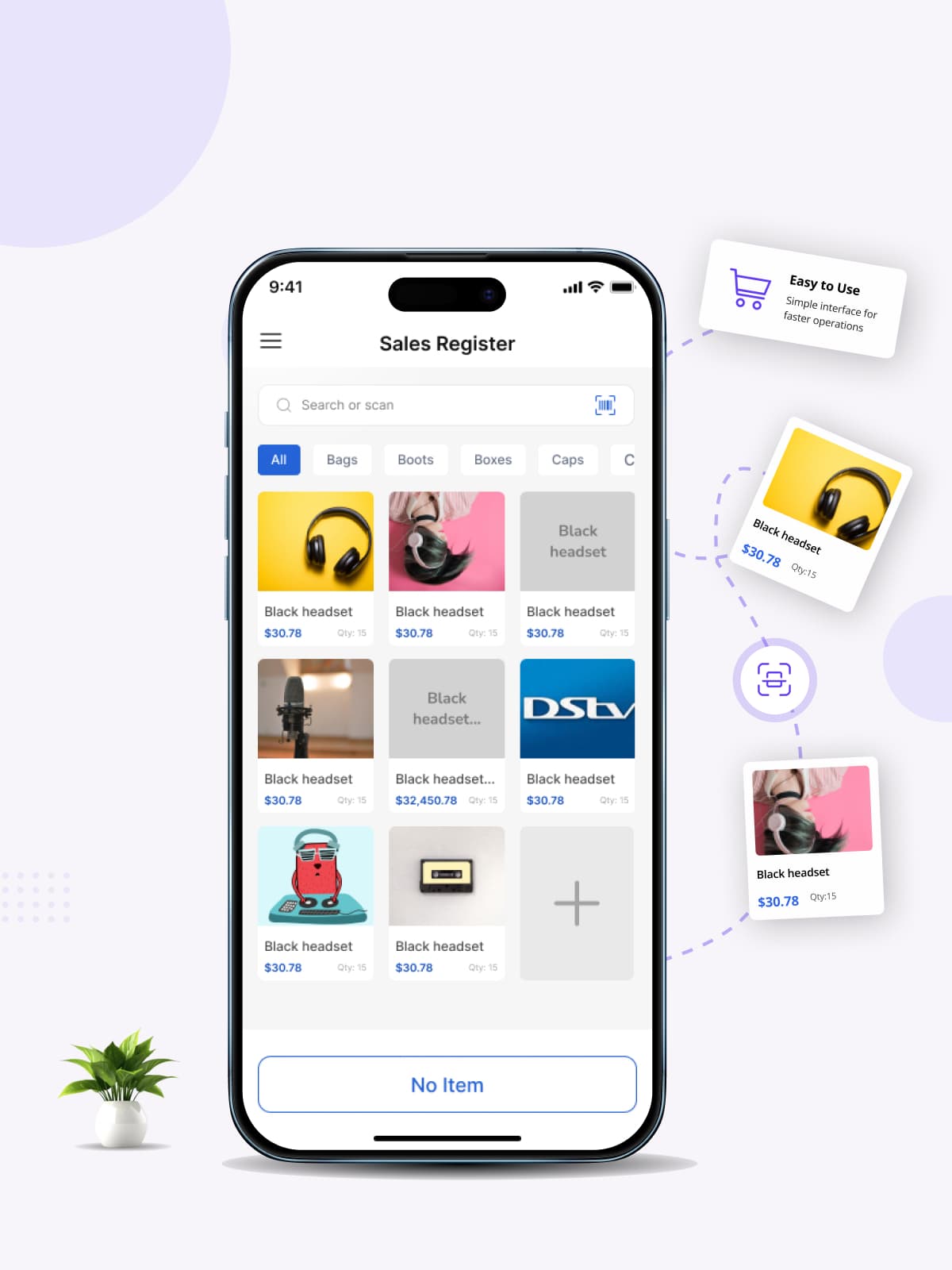
Retail and POS
Retail and POSInventory, multi-platform sync
CRM and internal tools
CRM and internal toolsData-heavy systems that grew 100x
Events and community
Events and communityReal-time chat and messaging at scale
Healthcare and wellness
Healthcare and wellnessOpen, no case study yet

What sits behind the app

The part nobody sees is the part that wakes you up

Screens fail politely. Backends fail at three in the morning, for everyone at once. The standards below exist because of that difference.

A broadcast mast transmitting from a phone

Process

How we work

First call

What the app has to do, and honestly whether a managed platform like Firebase would do it.

30 min

Data and integration map

Every entity, every external system, every failure case, on one page.

3 to 5 days

Architecture decision, written down

Including what it costs at 10x and what leaving us would involve.

2 to 3 days

Accounts opened in your name

Before any code. Cloud, monitoring, error reporting.

1 day

Build the API in two-week blocks

Documented as it goes, with a staging environment you can reach.

2 weeks each

Integrations, one at a time

Each with its down-behaviour defined.

2 to 5 days each

Load test and cost test

10x volume. You get the numbers and the monthly cost at that volume.

2 to 3 days

Caps, alerts, backup restore test

The spending brakes and the restore drill, both checked before handover.

1 day

Handover and runbook

Deploy, roll back, who to call, what the alerts mean.

2 to 3 days

Engagement

How we work together

ModelBest forHow it works
Backend reviewYou have a backend and you are worried about cost, speed or scalePaid, fixed price, fixed length, credited back in full against work that follows.
Fixed-scope buildThe data and integration map is agreedOne price, one date.
Two-week blocksThe product is still movingPriced per block, stop whenever you like.
Monthly retainerOngoing scale, monitoring and integrationsSee Mobile App Maintenance & Optimization.

No minimum contract size.

What changes the price

Pushes it up

  • Real-time features: chat, live tracking, settlement
  • Many integrations, especially with old systems
  • Regulated data
  • High volume or heavy reporting
  • Data residency requirements
  • Migrating off an existing backend

Pulls it down

  • A managed platform is genuinely enough
  • Few integrations
  • We also built your app
  • Your data model is already stable
  • You have no legacy system to talk to

You get a fixed number after the data and integration map: three to five days. Before that, anyone quoting you is quoting a guess, and on backends the guess is usually wrong by a multiple, not a percentage.

WALL OF PROOF

What clients say once the project is over

The SightInfusion team delivered our app with impressive speed, clear communication, and reliable quality. Every detail was handled thoughtfully, and the final result exceeded expectations. A professional team we're excited to work with again soon.

Dimitri Orga
Dimitri Orga
CEO & Asset Manager, FIDEX DLT

Working with SightInfusion was a smooth and professional experience. The team was proactive, technically strong, and always transparent with updates. Our finance app was delivered on time with great care. We look forward to future projects together.

Debi Prasad Naik
Debi Prasad Naik
CTO, EVOS Solutions Private Limited

SightInfusion handled our complex project with patience, expertise, and consistent communication. Their team learns fast, solves challenges quickly, and delivers dependable results. A skilled, trustworthy team we'll confidently partner with again in the future.

Vishal Pulikottil
Vishal Pulikottil
CEO / Founder, Instinctive Studio

Stack

Tech we use

Backend
Node.js
TypeScript
Firebase
Supabase
Databases
PostgreSQL
Firestore
Redis
Cloud
Google Cloud
AWS
APIs
REST
GraphQL
Payments
Stripe
Razorpay
Messaging
WhatsApp

APIs versioned and documented. CI/CD, staging that matches production, error monitoring, uptime and budget alerts, on every project.

FAQ

Questions buyers actually ask

Who hosts my database, is it me?

Yes, and that is deliberate. Cloud accounts are opened in your company name in week one and billed to you. We work inside your accounts. See how we work to spec.

Can I just use Firebase?

Often, yes, and on a first version we will usually tell you to. The honest version of when it stops being the right answer is in Firebase, Supabase, or your own.

What stops me getting a $70,000 bill?

Hard instance and concurrency limits, per-key rate limiting, secret scanning, budget alerts at three thresholds, and a costed load test before launch. And the uncomfortable fact that platform spending caps are usually alerts, not brakes. See the bill that arrives when you are not looking.

Will I be locked in to you?

No. Your accounts, your repository, your keys. Data access goes through one layer, so moving is a project of weeks rather than months. Replace us and you change one password. See how we work to spec and Firebase, Supabase, or your own.

Why does the invisible part cost as much as the app?

Because it is where scale, cost and reliability are decided. Uptime, success rate under bad conditions, speed of the one operation that matters, and behaviour at 10x volume: those numbers are what you are actually buying.

How do I judge backend work if I cannot see it?

Uptime, success rate under bad conditions, speed of the one operation that matters, and behaviour at 10x volume. We hand you all four in writing.

Can you connect to the system we already use?

Almost certainly, including old ones. What matters is what happens when that system is down. We define that for every integration. See connecting to everything else you already run.

What happens if a provider changes their API?

Versions are pinned and monitored, so it becomes a ticket rather than an outage.

Do you do REST or GraphQL?

Both. We pick per project and explain the choice in plain words. See standards for the API itself.

Are my backups actually working?

They are on our projects, because we restore one as a test before handover. An untested backup is a rumour.

What does it cost to run each month?

You get the figure at today’s volume and at 10x volume, before launch. It is step 7 of how we work.

Can our own developer take it over?

Yes. Documented API, runbook, and accounts already in your name. Handover is a normal ending, not a penalty.

Do you build the admin panel too?

That is a separate service, Web Apps & Admin Panels, usually scoped together with this.

Do you handle subscription billing?

The payment integration, yes. The billing logic, proration, dunning, upgrades mid-cycle, is its own hard problem and lives on SaaS Development.

Have something in mind

Tell us the problem. We bring the engineering.

A short call, an honest answer on whether we are the right team, and a scope you can hold us to.

Start a project